





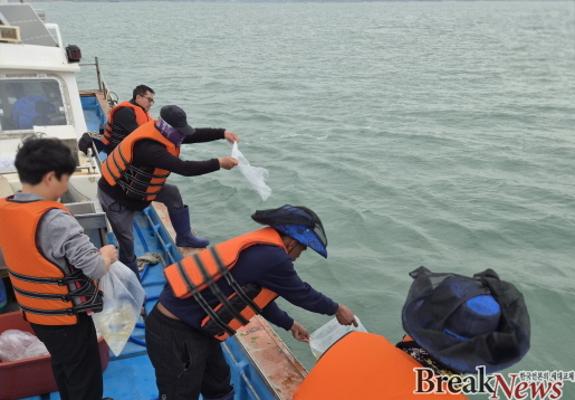
| ▲ 전라남도해양수산과학원이 지역 어업인들과 함께 전남 연안 해역에서 자체 생산한 어린 주꾸미를 방류하고 있다. |
(완도=브레이크뉴스) 이학수 기자=전라남도해양수산과학원이 어촌의 대표적인 ‘효자 수산물’로 꼽히는 주꾸미의 자원 회복과 어가 소득 증대를 위해 자체 생산한 어린 주꾸미 40만 마리를 연안 해역에 대대적으로 방류한다.
과학원은 오는 25일까지 8일간 신안, 함평, 무안, 진도 등 전남 주요 연안 해역에 어린 주꾸미를 분산 방류한다고 밝혔다.
이번에 방류되는 어린 주꾸미는 지역 해역에서 확보한 건강한 우량 어미로부터 태어났다. 자원조성연구소 인공 산란장에서 약 한 달간의 부화 및 성장 과정을 거쳐 전남 바다에 적응할 수 있는 건강한 상태로 생산됐다. 특히 이번 방류에는 지자체와 수협, 지역 어업인들이 한마음으로 직접 참여해 ‘풍요로운 바다 만들기’에 뜻을 모았다.
주꾸미는 방류 후 1년이면 약 12cm 전후의 성체로 빠르게 성장하는 것이 특징이다. 서해와 남해의 얕은 연안에 머무는 정착성 수산생물이기 때문에, 방류 효과가 타 지역으로 분산되지 않고 전남 지역 어업인들의 실질적인 소득으로 직결될 것으로 기대된다.
현재 주꾸미는 1kg(약 13마리)당 5만~6만 원 선을 호가하는 대표적인 고소득 어종이다. 지난 2025년 기준 우리나라 전체 주꾸미 생산량(3,702톤) 중 전남이 456톤(약 12%)을 차지할 만큼, 지역 연근해 어업의 핵심 소득원으로 자리 잡고 있다.
전남도해양수산과학원은 주꾸미의 경제적·생태적 가치에 주목해 지난 2014년부터 12년간 총 349만 마리의 종자를 지속적으로 방류해 왔다. 이처럼 장기적인 안목으로 추진된 자원 조성 사업은 전남 해역의 수산 생태계를 풍요롭게 가꾸는 것은 물론, 어촌 경제 활성화에도 효자 노릇을 톡톡히 하고 있다.
아래는 위 기사를 '구글 번역'으로 번역한 영문 기사의 [전문] 입니다. '구글번역'은 이해도를 높이기를 위해 노력하고 있습니다. 영문 번역에 오류가 있을 수 있음을 전제로 합니다. The following is [the full text] of the English article translated by 'Google Translate'. 'Google Translate' is working hard to improve understanding. It is assumed that there may be errors in the lish translation.
Jeonnam Marine Fisheries Research and Development Institute Releases 400,000 Juvenile Octopuses, a "Benefit" Fishery Product, into Coastal Waters
Distributed release over 8 days until the 25th in waters off Sinan, Hampyeong, Muan, and Jindo - Expected to directly contribute to increased income for local fishermen due to the sedentary nature of the species
(Wando = Break News) Reporter Lee Hak-su = The Jeonnam Marine Fisheries Research and Development Institute is releasing 400,000 juvenile octopuses, produced in-house, into coastal waters to restore resources of the octopus—considered a representative "benefit" fishery product of fishing villages—and to increase fishermen's income.
The Institute announced that it will distribute the juvenile octopuses over eight days until the upcoming 25th across major coastal waters in Jeonnam, including Sinan, Hampyeong, Muan, and Jindo.
The juvenile octopuses being released this time were born from healthy, high-quality broodstock secured from local waters. They were produced in a healthy state capable of adapting to the waters of Jeonnam after undergoing a hatching and growth process of approximately one month at the artificial spawning grounds of the Resource Conservation Research Institute. Notably, local governments, fisheries cooperatives, and regional fishermen participated wholeheartedly in this release, uniting their efforts to "create an abundant sea."
A characteristic of the Japanese octopus is that it grows rapidly into an adult of approximately 12 cm within one year of release. As it is a sedentary aquatic organism that stays in the shallow coastal waters of the West and South Seas, it is expected that the benefits of the release will not be dispersed to other regions but will directly translate into tangible income for fishermen in the Jeonnam region.
Currently, the Japanese octopus is a representative high-income species, commanding a price of around 50,000 to 60,000 won per kilogram (approximately 13 individuals). It has established itself as a core source of income for the region's coastal fisheries, with Jeonnam accounting for 456 tons (approximately 12%) of the total national Japanese octopus production (3,702 tons) as of 2025. The Jeonnam Institute of Marine and Fisheries Science has focused on the economic and ecological value of the Japanese octopus and has continuously released a total of 3.49 million juveniles over the past 12 years since 2014. This resource conservation project, pursued with a long-term perspective, is not only enriching the fisheries ecosystem in the waters off Jeonnam but is also playing a significant role in revitalizing the fishing village economy.
기자 : 이학수
출처 : 브레이크뉴스 전남
- 다음글 글이 없습니다.
- 이전글 전남 완도군, 해조류 탄소거래·블루 크래딧 시범 사업 추진