




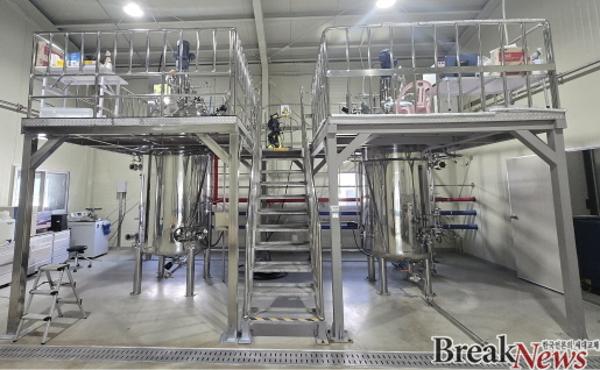
| ▲ 전라남도해양수산과학원 내 위치한 유용미생물 배양실에서 고품질 미생물이 배양되고 있다. |
(완도=브레이크뉴스) 이학수 기자=전라남도해양수산과학원이 기후 변화와 생산 원가 상승으로 이중고를 겪고 있는 양식 현장의 경쟁력을 높이기 위해 ‘친환경 유용미생물’ 무상 보급을 올해 대폭 확대한다.
14일 해양수산과학원에 따르면, 올해 전남 지역 59개 육상양식 어가를 선정해 총 100여 톤의 유용미생물을 무상으로 공급할 방침이다. 이는 지난 2023년부터 2025년까지 3년간 공급했던 총량인 80톤을 상회하는 역대 최대 규모다.
이번 지원은 완도, 해남, 고흥, 신안 지역의 주요 양식 품종인 넙치, 뱀장어, 전복, 흰다리새우 어가에 집중될 예정이다.
과학원이 자체 생산해 공급하는 미생물은 고초균, 광합성균, 유산균, 효모 등 총 4종이다. 이들 미생물은 양식장 내 수질을 정화하고 어패류의 질병 예방 및 내병성을 강화하는 데 탁월한 효과가 있는 것으로 입증됐다.
특히 사료 효율을 높여 어가 경영비 절감에 크게 기여하고 있어 현장 어업인들로부터 큰 호응을 얻고 있다.
전남도는 유용미생물의 안정적인 공급을 위해 생산 인프라를 꾸준히 강화해 왔다. 2020년 대량 배양시설 구축에 이어, 지난해(2025년)에는 3억 원의 사업비를 투입해 1.5톤 규모의 멸균 배양 시스템을 추가 도입하며 고품질 미생물을 대량 생산할 수 있는 체계를 완성했다.
단순 보급을 넘어 연구 고도화에도 박차를 가한다. 지난 5년간의 수질 개선 연구 성과를 바탕으로, 올해는 양식장 바닥 퇴적물인 ‘저질’ 환경을 개선하는 연구를 중점 추진한다. 이를 통해 양식 생물의 스트레스를 낮추는 ‘동물 복지형’ 양식 생태계를 조성한다는 계획이다.
김충남 전남해양수산과학원장은 “미생물 보급 확대는 양식 환경 개선과 생산비 절감을 통해 어가 소득을 직접적으로 높일 수 있는 실효성 있는 정책”이라며 “앞으로도 시설 확충과 맞춤형 기술 교육을 통해 전남이 대한민국 친환경 양식산업을 선도할 수 있도록 하겠다”고 밝혔다.
아래는 위 기사를 '구글 번역'으로 번역한 영문 기사의 [전문] 입니다. '구글번역'은 이해도를 높이기를 위해 노력하고 있습니다. 영문 번역에 오류가 있을 수 있음을 전제로 합니다. The following is [the full text] of the English article translated by 'Google Translate'. 'Google Translate' is working hard to improve understanding. It is assumed that there may be errors in the lish translation.
Jeonnam Institute of Marine Science and Technology Significantly Expands Free Distribution of ‘Eco-friendly Beneficial Microorganisms’
100 Tons to be Supplied This Year… ‘Largest Ever’ Exceeding the Total of the Past Three Years; All-Out Effort to Strengthen Fishery Competitiveness by Improving Water Quality and Reducing Production Costs
(Wando = Break News) Reporter Lee Hak-su = The Jeonnam Institute of Marine Science and Technology is significantly expanding the free distribution of ‘eco-friendly beneficial microorganisms’ this year to enhance the competitiveness of aquaculture sites, which are facing a double burden of climate change and rising production costs.
According to the Institute on the 14th, the plan is to select 59 land-based aquaculture households in the Jeonnam region this year and supply a total of approximately 100 tons of beneficial microorganisms free of charge. This marks the largest scale in history, exceeding the total of 80 tons supplied over the three years from 2023 to 2025.
This support is scheduled to focus on farms raising major aquaculture species—flatfish, eels, abalone, and whiteleg shrimp—in the Wando, Haenam, Goheung, and Sinan regions.
The microorganisms produced and supplied by the Institute in-house consist of a total of four types: Bacillus subtilis, photosynthetic bacteria, lactic acid bacteria, and yeast. These microorganisms have been proven to have excellent effects in purifying water quality within aquaculture farms, preventing diseases in fish and shellfish, and strengthening their disease resistance.
In particular, they are receiving a great response from fishermen in the field as they significantly contribute to reducing farm management costs by improving feed efficiency.
Jeonnam Province has consistently strengthened its production infrastructure to ensure a stable supply of beneficial microorganisms. Following the establishment of a mass culture facility in 2020, the province invested 300 million won last year (2025) to introduce an additional 1.5-ton sterile culture system, completing a system capable of mass-producing high-quality microorganisms.
Beyond simple distribution, the province is also accelerating the advancement of research. Building on the achievements of water quality improvement research over the past five years, this year will focus on research to improve the ‘sediment’ environment of aquaculture farms. Through this, the plan is to create an ‘animal welfare-oriented’ aquaculture ecosystem that reduces stress on farmed organisms.
Kim Chung-nam, Director of the Jeonnam Institute of Marine Science and Technology, stated, “Expanding the supply of microorganisms is an effective policy that can directly increase fishermen’s income by improving the aquaculture environment and reducing production costs.” He added, “We will continue to expand facilities and provide customized technical training to ensure that Jeonnam leads Korea’s eco-friendly aquaculture industry.”
기자 : 이학수
출처 : 브레이크 뉴스 원문 클릭